Running a hotel today feels a little like managing a living system. There are guests arriving from different time zones, staff juggling priorities, and expectations that keep rising. Many hotel owners and managers I speak with are curious about AI in hotels, but they also feel unsure where to begin. The technology sounds powerful, yet complex. That feeling is completely normal. When approached step by step, AI in hotels becomes less about replacing people and more about supporting them. It helps teams work with clarity, reduce pressure, and create smoother guest experiences. This article is written as a calm conversation, not a technical manual. Think of it as a guided walk through how AI agents and automation can quietly improve hotel operations without overwhelming your team.
AI in hotels and the shift toward smarter guest journeys
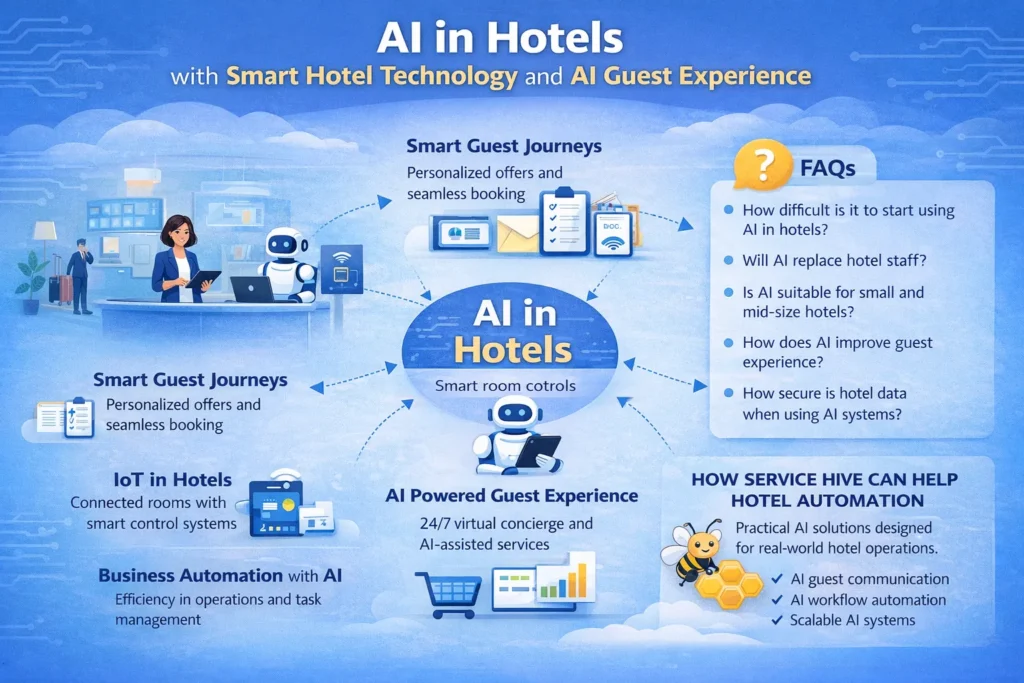
The guest journey begins long before check in. Search, booking, confirmation, and pre arrival questions all shape first impressions. AI in hotels helps manage these early touchpoints with care. AI agents for marketing can personalize offers based on travel intent, season, or past stays. AI agents use cases often include automated email responses that feel timely and relevant. Instead of generic messages, guests receive information that actually helps them plan. This approach reduces manual work while improving engagement. The result is a calmer front desk and guests who arrive feeling informed rather than confused.
IoT in hotels and connected room experiences
IoT in hotels works quietly behind the scenes. Smart thermostats, lighting, and room controls respond to guest preferences without constant staff intervention. When connected with AI in hotels, these systems become more intelligent over time. AI powered decision systems can analyze usage patterns and adjust settings for comfort and energy efficiency. This is business process automation with AI applied to physical spaces. Staff no longer need to manage every request manually. Guests enjoy rooms that feel intuitive and responsive, while hotels reduce operational costs in a controlled and thoughtful way.
Hotel guest experience shaped by AI powered services
Guest experience is built on small moments. Quick answers, smooth check in, and clear communication matter more than grand gestures. AI in hotels supports this by introducing AI customer support agents that handle common questions around amenities, dining hours, or local information. These agents are available at any hour and improve with each interaction. Enterprise AI agents can also support loyalty programs by recognizing returning guests and preferences. This consistency builds trust. Staff remain available for meaningful interactions rather than repetitive questions.
AI agents for business automation in hotel operations
Behind the scenes, hotel operations involve many moving parts. Scheduling, housekeeping coordination, inventory tracking, and vendor management all require attention. AI in hotels enables AI agents for business automation to manage these workflows smoothly. AI workflow automation connects systems that often operate separately. For example, room status updates can trigger cleaning schedules automatically. Autonomous AI agents monitor delays or issues and alert managers before problems escalate. This reduces stress for staff and creates a more predictable daily rhythm across departments.
AI powered decision systems for smarter management
Data is everywhere in hospitality, but it often feels fragmented. AI in hotels brings clarity by turning raw data into useful insights. AI powered decision systems analyse occupancy trends, pricing patterns, and guest behaviour together. Instead of reacting late, managers can plan ahead. This supports modern AI automation strategies that focus on foresight rather than correction. AI agent architecture ensures that insights flow to the right teams at the right time. Decisions feel informed, not rushed, which improves both profitability and team confidence.
Scalable AI systems for growing hotel brands
Growth introduces complexity. New locations, larger teams, and diverse guest expectations can strain systems. AI in hotels supports scalable AI systems that grow alongside the business. AI agents in SaaS platforms help standardize processes across properties. AI agents for small businesses offer lighter solutions, while enterprise AI agents support multi location operations. This flexibility allows hotels to adopt AI at their own pace. AI driven business models emerge gradually, ensuring stability while expanding services and reach.
Exploring AI does not require a sudden transformation. Start with one area that feels manageable, such as guest communication or scheduling. Learn from small wins and expand with confidence. AI in hotels works best when it supports people rather than overwhelms them. By understanding AI agents examples and applying intelligent automation solutions thoughtfully, hotel teams can build systems that save time and reduce stress. Take it step by step. Ask questions, test ideas, and involve your team early. Over time, AI becomes a trusted partner in creating smoother operations and better guest experiences.
Read More….